<?xml version="1.0" encoding="utf-8"?><feed xmlns="http://www.w3.org/2005/Atom" ><generator uri="https://jekyllrb.com/" version="4.4.1">Jekyll</generator><link href="https://www.iksnae.com/feed.xml" rel="self" type="application/atom+xml" /><link href="https://www.iksnae.com/" rel="alternate" type="text/html" /><updated>2026-03-23T20:43:54+00:00</updated><id>https://www.iksnae.com/feed.xml</id><title type="html">iksnae</title><subtitle>&quot;random&quot; posts by K</subtitle><author><name>K</name></author><entry><title type="html">Vedic Dharma and Jung’s Individuation: A Comparative Exploration</title><link href="https://www.iksnae.com/2025/06/20/vedic-dharma-and-jungs-individuation-a-comparative-exploration/" rel="alternate" type="text/html" title="Vedic Dharma and Jung’s Individuation: A Comparative Exploration" /><published>2025-06-20T14:01:52+00:00</published><updated>2025-06-20T14:01:52+00:00</updated><id>https://www.iksnae.com/2025/06/20/vedic-dharma-and-jungs-individuation-a-comparative-exploration</id><content type="html" xml:base="https://www.iksnae.com/2025/06/20/vedic-dharma-and-jungs-individuation-a-comparative-exploration/"><![CDATA[<p>In this post I’m sharing the results of some of my own journey where I noticed a connection between the concepts in Vedic Dharma and Carl Jung’s Individuation. After an extensive chat with GPT on the topic we generated a base document that was used as the starting point in another thread with Deep Research enabled. The results of that process was that PDF below. Then I uploaded that PDF to NotebookLM and generated the audio Deep Dive in podcast format based on that PDF. I thought someone else might also find this info useful so here it is. Enjoy.</p>

<p>Update: I’ve also taken liberty to upload translations of the PDF in Japanese and Spanish. I also created podcast in Spanish but it came out significantly shorter.</p>

<p><img src="/assets/media/2025/06/Vedic-Dharma-and-Jungs-Individuation_-A-Comparative-Exploration.png" alt="" /></p>

<audio controls="" src="/assets/media/2025/06/Vedic-Dharma-and-Jungs-Individuation_-A-Comparative-Exploration.wav"></audio>

<p>Podcast en Espanol:</p>

<audio controls="" src="/assets/media/2025/06/Vedic-Dharma-and-Jungian-Individuation_-A-Parallel-Journey-en-espanol-2.wav"></audio>]]></content><author><name>K</name></author><category term="Writing" /><summary type="html"><![CDATA[In this post I’m sharing the results of some of my own journey where I noticed a connection between the concepts in Vedic Dharma and Carl Jung’s Individuation. After an …]]></summary></entry><entry><title type="html">Rise &amp;amp; Code: Programming Education for Everyone, No Computer Required (First Draft)</title><link href="https://www.iksnae.com/2025/03/17/rise-code-programming-education-for-everyone-no-computer-required-first-draft/" rel="alternate" type="text/html" title="Rise &amp;amp; Code: Programming Education for Everyone, No Computer Required (First Draft)" /><published>2025-03-17T23:45:16+00:00</published><updated>2025-03-17T23:45:16+00:00</updated><id>https://www.iksnae.com/2025/03/17/rise-code-programming-education-for-everyone-no-computer-required-first-draft</id><content type="html" xml:base="https://www.iksnae.com/2025/03/17/rise-code-programming-education-for-everyone-no-computer-required-first-draft/"><![CDATA[<p>Today, I’m thrilled to share a project that’s been brewing in my workshop: <strong>Rise &amp; Code</strong> – a first draft of a free, open-source book designed to teach programming, software development, and logical problem-solving to people without access to computers. This is very much a work in progress, but I’m excited to share where we’re headed.</p>

<h2 id="why-this-book-matters">Why This Book Matters</h2>

<p>In our increasingly digital world, programming skills are becoming essential. Yet for millions around the globe, access to computers remains limited or nonexistent. This digital divide threatens to leave many behind in developing the critical thinking and problem-solving skills that programming teaches.</p>

<p><strong>Rise &amp; Code</strong> bridges this gap by making programming education accessible to everyone, regardless of their access to technology. Using just pen and paper, learners can develop computational thinking, algorithmic reasoning, and the fundamental concepts that power all programming languages.</p>

<h2 id="how-it-works-the-notebook-method">How It Works: The Notebook Method</h2>

<p>At the core of Rise &amp; Code is what we call “the notebook method” – a hands-on approach where learners use a simple notebook as their “paper computer.” Through carefully designed activities, readers:</p>

<ul>
  <li>
    <p>Create algorithms for everyday tasks</p>
  </li>
  <li>
    <p>Track variables and data through visual representations</p>
  </li>
  <li>
    <p>Design flowcharts to map program execution</p>
  </li>
  <li>
    <p>Simulate loops and conditional logic through physical exercises</p>
  </li>
  <li>
    <p>Build pattern recognition skills fundamental to programming</p>
  </li>
</ul>

<p>Each chapter includes engaging, culturally inclusive examples and activities designed to work in diverse settings with minimal resources.</p>

<h2 id="whats-inside-the-book">What’s Inside the Book</h2>

<p>The book is structured to progressively build skills across nine comprehensive chapters:</p>

<ul>
  <li>
    <p><strong>Introduction: The World of Coding Without a Computer</strong></p>
  </li>
  <li>
    <p><strong>The Human Compiler: Understanding Logic and Structure</strong></p>
  </li>
  <li>
    <p><strong>Playful Programming: Fun with Algorithms</strong></p>
  </li>
  <li>
    <p><strong>Data Explorers: Understanding Variables and Data Types</strong></p>
  </li>
  <li>
    <p><strong>Control Creators: Loops and Repetition</strong></p>
  </li>
  <li>
    <p><strong>The Engineering Notebook: Practicing Like a Pro</strong></p>
  </li>
  <li>
    <p><strong>Coding Challenges: Building Skills Through Practice</strong></p>
  </li>
  <li>
    <p><strong>Real-world Applications: Connecting Coding to Everyday Life</strong></p>
  </li>
  <li>
    <p><strong>Beyond the Book: Next Steps in Your Coding Journey</strong></p>
  </li>
</ul>

<p>Plus appendices with a glossary, answer keys, and recommended resources.</p>

<h2 id="designed-for-everyone">Designed for Everyone</h2>

<p>Whether you’re a student, educator, community leader, or simply curious about programming, Rise &amp; Code is for you. The book is:</p>

<ul>
  <li>
    <p><strong>Age-inclusive</strong>: Designed for learners from age 10 to adult</p>
  </li>
  <li>
    <p><strong>Globally relevant</strong>: Features diverse examples that work across cultures</p>
  </li>
  <li>
    <p><strong>Educationally sound</strong>: Built on proven teaching methodologies</p>
  </li>
  <li>
    <p><strong>Immediately practical</strong>: Activities can be implemented right away</p>
  </li>
  <li>
    <p><strong>Progressively challenging</strong>: Builds skills from simple to complex</p>
  </li>
</ul>

<h2 id="a-community-effort">A Community Effort</h2>

<p>Rise &amp; Code is an open-source, collaborative project released under a Creative Commons license (CC BY-NC-SA 4.0). This means it’s free to share, adapt, and build upon for non-commercial purposes.</p>

<p>The book is a work in progress, with automated systems helping me publish new versions as the content evolves. This first draft is just the beginning – I’m sharing it early to gather feedback and improve it over time.</p>

<h2 id="get-involved-in-this-work-in-progress">Get Involved in this Work-in-Progress</h2>

<p>This project is very much in its early stages, and I’m looking for collaborators who are excited about its potential. There are several ways to engage:</p>

<ul>
  <li>
    <p><strong>Read and give feedback</strong>: Download the latest version and let me know what works and what doesn’t</p>
  </li>
  <li>
    <p><strong>Contribute</strong>: Help improve content, add translations, or create illustrations</p>
  </li>
  <li>
    <p><strong>Test activities</strong>: Try the activities with learners and share your experiences</p>
  </li>
  <li>
    <p><strong>Spread the word</strong>: Share with educators, community organizations, and anyone who might be interested</p>
  </li>
</ul>

<p>If you’re interested in contributing, check out the <a href="https://github.com/iksnae/rise-and-code">GitHub repository</a> and the contribution guidelines.</p>

<h2 id="the-vision">The Vision</h2>

<p>I believe programming education shouldn’t be limited by access to technology. The computational thinking skills developed through programming are valuable for everyone, in all aspects of life and across all careers.</p>

<p>Rise &amp; Code represents my commitment to making these powerful skills accessible to all, creating pathways to technology careers for those historically excluded, and empowering communities to solve problems through computational thinking.</p>

<h2 id="download-and-explore-the-early-draft">Download and Explore the Early Draft</h2>

<p>Ready to explore the current version of Rise &amp; Code? The book is available in multiple formats:</p>

<ul>
  <li>
    <p><a href="https://github.com/iksnae/rise-and-code/releases/latest">Download PDF</a></p>
  </li>
  <li>
    <p><a href="https://github.com/iksnae/rise-and-code/releases/latest">Download EPUB</a></p>
  </li>
  <li>
    <p><a href="https://iksnae.github.io/rise-and-code/">Read Online (HTML)</a></p>
  </li>
</ul>

<p>Remember, this is an early draft that will continue to improve. Your feedback and suggestions can help make it better!</p>

<p>Join me in this journey to make programming education accessible to everyone, regardless of their access to technology. Together, we can help learners everywhere to Rise &amp; Code!</p>

<p><em>Have you used unplugged programming activities before? How do you think learning programming without a computer could benefit students? Share your thoughts in the comments below.</em></p>]]></content><author><name>K</name></author><category term="Writing" /><summary type="html"><![CDATA[Today, I’m thrilled to share a project that’s been brewing in my workshop: Rise & Code – a first draft of a free, open-source book designed to teach programming, software development, and …]]></summary></entry><entry><title type="html">The Decline of Professional Developers: Why Bad Code Still Rules in an AI World</title><link href="https://www.iksnae.com/2025/01/26/the-decline-of-professional-developers-why-bad-code-still-rules-in-an-ai-world/" rel="alternate" type="text/html" title="The Decline of Professional Developers: Why Bad Code Still Rules in an AI World" /><published>2025-01-26T15:16:21+00:00</published><updated>2025-01-26T15:16:21+00:00</updated><id>https://www.iksnae.com/2025/01/26/the-decline-of-professional-developers-why-bad-code-still-rules-in-an-ai-world</id><content type="html" xml:base="https://www.iksnae.com/2025/01/26/the-decline-of-professional-developers-why-bad-code-still-rules-in-an-ai-world/"><![CDATA[<p>Bad code isn’t new. It’s been haunting the tech world for decades. What’s troubling now is that it’s thriving in ways we couldn’t have imagined before. Generative AI, a tool with limitless potential, is making it easier and faster to ship bad code than ever. Instead of raising the bar, we’ve given bad habits a turbo boost.</p>

<p>The rise of AI tools highlights something we’ve known for a while: there’s a critical shortage of <em>professional</em> developers—those who take the craft of coding seriously. Instead, we’re flooded with an ever-growing number of coders who lack the skills, discipline, or commitment to write clean, maintainable software. And no, AI isn’t fixing that. It’s just exposing the cracks in the system.</p>

<p><strong>Why Bad Code Is Winning</strong></p>

<p>Let’s face it: most developers don’t care about writing good code. The industry celebrates “shipped it fast” over “shipped it right.” As long as it runs, it’s good enough. But this mindset is short-sighted. Bad code doesn’t just cause bugs; it multiplies. It makes systems harder to maintain, harder to scale, and harder to fix when something goes wrong.</p>

<p>Movements like <em>Clean Code</em> and <em>The Scribe’s Oath</em> exist to counter this culture, but let’s be real: they’re niche. Only a tiny fraction of developers care enough to embrace them. The rest? They’re stuck in the churn of quick fixes and patchwork solutions, either unaware or indifferent to the long-term damage they’re causing.</p>

<p>The problem isn’t just individual developers, though—it’s systemic. Companies prioritize speed and cost over quality. They want results yesterday, and they’re willing to sacrifice professionalism to get them. This is how bad code becomes the default: it’s cheaper, faster, and no one cares enough to fix it.</p>

<p><strong>The Shrinking Pool of Professionals</strong></p>

<p>What’s worse is that the number of <em>professional</em> developers is actually shrinking. Sure, there are more people coding than ever before, but professionalism? That’s another story. Companies increasingly hire fresh graduates straight out of college—people who’ve never written production-ready software—and then expect them to just figure it out.</p>

<p>I saw this firsthand while working with CS students in a NYC program. These weren’t beginners; they were about to graduate. But most of them didn’t know how to build <em>anything</em>. They understood algorithms and data structures, sure, but they had no idea how to write code that could actually run in the real world. I was shocked. How do you get a CS degree without knowing how to build software?</p>

<p>This isn’t just an education problem. Companies don’t prioritize mentorship or training anymore. Instead, they expect developers to learn on the job, which often means learning from other inexperienced developers. It’s a vicious cycle, and the result is what you’d expect: bad code everywhere.</p>

<p><strong>AI is Pouring Gasoline on the Fire</strong></p>

<p>Enter generative AI. It’s a tool with immense potential, but instead of raising the bar, it’s making things worse. In the hands of a skilled developer, AI can be transformative. It can automate grunt work, speed up iteration, and free up time for more creative problem-solving. But in the hands of someone who doesn’t know what they’re doing? It’s a disaster.</p>

<p>AI doesn’t replace the need for good coding practices. If anything, it demands more discipline. A poorly written prompt produces poorly written code, and if the user can’t evaluate or refine it, the bad output goes straight into production. What we’re seeing now is AI being used to crank out bad code faster than ever before, creating even more technical debt and dysfunction.</p>

<p>This isn’t a knock on AI—it’s a knock on how people are using it. AI isn’t a shortcut to competence. It’s a tool, and like any tool, its effectiveness depends on the skill of the user. But that’s the problem: too many developers think AI can replace the need for skill, and the industry is letting them get away with it.</p>

<p><strong>Why We Need to Prioritize Professionalism</strong></p>

<p>The tech industry has a choice to make. We can keep celebrating speed over quality, or we can start valuing the craft of software development. If we don’t, the future of code is going to look a lot like its past: messy, unmaintainable, and full of shortcuts.</p>

<p>Here’s what needs to change:</p>

<ol>
  <li>
    <p><strong>Mentorship and Training</strong>: Companies need to invest in their developers, not just hire them and hope for the best. Mentorship should be a priority, and clean code principles should be part of every onboarding process.</p>
  </li>
  <li>
    <p><strong>Reform Education</strong>: Universities and bootcamps need to do better. Teaching theory is fine, but students also need to learn how to write production-ready code. There’s no excuse for graduating with a CS degree and not knowing how to build software.</p>
  </li>
  <li>
    <p><strong>Use AI Responsibly</strong>: AI should be a tool for augmentation, not a replacement for understanding. Developers need to treat AI as a junior collaborator, not a magic wand.</p>
  </li>
  <li>
    <p><strong>Reward Craftsmanship</strong>: The industry needs to stop tolerating bad code. We should be celebrating developers who take the time to write clean, maintainable software—not the ones who ship things fastest.</p>
  </li>
</ol>

<p><strong>The Bottom Line</strong></p>

<p>Bad code didn’t start with AI, and it won’t end with it either. But generative AI has made the problem impossible to ignore. It’s exposed the gap between those who take their craft seriously and those who don’t. And if we don’t address this gap, the future of software development is going to be a mess.</p>

<p>The principles of clean code and professionalism aren’t optional—they’re essential. They’re the difference between a system that works and a system that falls apart under its own weight. AI can be a game-changer, but only if we stop using it as an excuse for mediocrity and start using it to amplify the skills we already have.</p>

<p>It’s time to reclaim professionalism in software development. Anything less is just bad code on repeat.</p>]]></content><author><name>K</name></author><category term="AI" /><category term="Writing" /><summary type="html"><![CDATA[Bad code isn’t new. It’s been haunting the tech world for decades. What’s troubling now is that it’s thriving in ways we couldn’t have imagined before. Generative AI, a tool …]]></summary></entry><entry><title type="html">The Flaw of “Prompt-to-Anything” Culture: A Shortcut to Stagnation</title><link href="https://www.iksnae.com/2025/01/25/the-flaw-of-prompt-to-anything-culture-a-shortcut-to-stagnation/" rel="alternate" type="text/html" title="The Flaw of “Prompt-to-Anything” Culture: A Shortcut to Stagnation" /><published>2025-01-25T15:11:26+00:00</published><updated>2025-01-25T15:11:26+00:00</updated><id>https://www.iksnae.com/2025/01/25/the-flaw-of-prompt-to-anything-culture-a-shortcut-to-stagnation</id><content type="html" xml:base="https://www.iksnae.com/2025/01/25/the-flaw-of-prompt-to-anything-culture-a-shortcut-to-stagnation/"><![CDATA[<p>In the era of generative AI, we’ve witnessed a dramatic shift in how tasks are approached. What used to require meticulous effort — digging through documentation, participating in forums, or experimenting with trial and error — can now often be handled by a simple prompt. But this shift has also revealed a troubling trend: a growing culture of impatience and misplaced expectations. I call this the flaw of “Prompt-to-Anything” culture.</p>

<p>At its core, this culture thrives on the belief that AI tools should not only simplify tasks but eliminate them entirely. When this doesn’t happen, the result is often a cascade of complaints about how AI “fails” or “creates more work.” Yet, these frustrations say far more about the complainer than the tool.</p>

<p><strong>AI is a Tool, Not a Shortcut</strong></p>

<p>A tool is an extension of human capability, but it cannot replace the foundational skills or effort required to use it effectively. Consider this: a faster car doesn’t make someone a better driver. Similarly, AI doesn’t transform someone into an expert coder, writer, or artist overnight. It amplifies ability but also exposes gaps in understanding.</p>

<p>When someone complains that AI “failed” to perform a task, it often signals a deeper issue:</p>

<ol>
  <li>
    <p>A lack of understanding of the tool’s capabilities and limitations.</p>
  </li>
  <li>
    <p>An inability to communicate needs clearly or define the task effectively.</p>
  </li>
  <li>
    <p>A failure to engage in the iterative process required to refine outputs.</p>
  </li>
</ol>

<p>For those of us who approach AI with intentionality, these tools act as junior collaborators or assistants — perfect for grunt work but requiring our expertise to guide and shape results. Viewing AI as anything more than this often leads to misplaced frustration.</p>

<p><strong>The Debugging Paradox</strong></p>

<p>A friend recently shared this wry observation:</p>

<blockquote>
  <p><em>“</em>Although seeing the code I get on these so far I agree with this Reddit comment:</p>
</blockquote>

<blockquote>

  <ul>
    <li>
      <p>Shipping code in the old days: 2 hrs coding, 2 hrs debugging.</p>
    </li>
    <li>
      <p>Shipping code with AI: 5 min coding, 10 hours debugging<em>”</em></p>
    </li>
  </ul>

</blockquote>

<p>This perfectly captures the double-edged nature of relying on AI. While it may save time upfront, it often demands more effort on the backend to debug, refine, or correct results. But is this really a failure of the tool — or a failure of the user to manage their expectations?</p>

<p>Before AI, solving a problem required navigating documentation, asking questions in forums, or experimenting with different approaches. These were learning opportunities as much as problem-solving exercises. Now, many users expect AI to deliver perfect, ready-to-ship solutions, bypassing the need to engage with the process. When this doesn’t happen, they grow frustrated — not with their own lack of skill but with the tool that revealed it.</p>

<p><strong>No-Code is for Coders</strong></p>

<p>This phenomenon is part of a broader misunderstanding about tools in general. Take no-code solutions, for example. Many see these platforms as replacements for technical expertise, yet their real power lies in enabling coders to accelerate workflows. Similarly, AI tools are not for the unskilled to avoid effort but for skilled practitioners to extend their capabilities.</p>

<p>When used correctly, AI is transformative. It automates repetitive tasks, synthesizes information, and enables deeper focus on creativity and problem-solving. But when users view AI as a shortcut to eliminate effort entirely, they miss the point. The tool becomes a crutch, and the user stagnates.</p>

<p><strong>The Cost of Convenience Culture</strong></p>

<p>At its heart, the “Prompt-to-Anything” mindset reflects a broader cultural issue: the glorification of convenience at the expense of growth. When users rely on AI to bypass effortful processes, they lose out on opportunities to develop their skills, deepen their understanding, and truly own their work.</p>

<p>AI should be seen as a partner — a junior assistant or a co-creator that amplifies what you bring to the table. But this requires effort: understanding the tool, refining its outputs, and recognizing its limitations. Complaints about AI “creating more work” reveal not a failure of technology but a failure to engage with the process.</p>

<p><strong>A Call to Reframe Our Perspective</strong></p>

<p>Generative AI is a remarkable achievement, but its true potential lies in how we use it. It’s not a magic wand; it’s a collaborator. When we approach it with clear goals, a willingness to iterate, and an understanding of its strengths and weaknesses, we can unlock incredible possibilities. But if we continue to expect AI to eliminate effort entirely, we’ll not only be disappointed — we’ll miss the point entirely.</p>

<p>The flaw of “Prompt-to-Anything” culture isn’t just about frustration; it’s about a lost opportunity for growth. Let’s reject the shortcut mentality and embrace AI as a tool to augment, not replace, our humanity. Only then can we realize its true potential and our own.</p>]]></content><author><name>K</name></author><category term="AI" /><category term="Writing" /><category term="AI" /><summary type="html"><![CDATA[In the era of generative AI, we’ve witnessed a dramatic shift in how tasks are approached. What used to require meticulous effort — digging through documentation, participating in forums, or experimen]]></summary></entry><entry><title type="html"></title><link href="https://www.iksnae.com/2024/09/16/773/" rel="alternate" type="text/html" title="" /><published>2024-09-16T00:42:00+00:00</published><updated>2024-09-16T00:42:00+00:00</updated><id>https://www.iksnae.com/2024/09/16/773</id><content type="html" xml:base="https://www.iksnae.com/2024/09/16/773/"><![CDATA[<p><img src="/assets/media/2024/12/Screenshot-2024-09-15-at-1.30.43 PM-2-1024x619.png" alt="" /></p>

<p><img src="/assets/media/2024/12/Screenshot-2024-09-15-at-1.33.34 PM-2-1024x619.png" alt="" /></p>

<p><img src="/assets/media/2024/12/Screenshot-2024-09-15-at-1.32.43 PM-2-1-1024x619.png" alt="" /></p>

<p><img src="/assets/media/2024/12/ezgif-7-3adc1f8dd0.gif" alt="" /></p>]]></content><author><name>K</name></author><category term="Animation" /><category term="Illustration" /><category term="2D" /><summary type="html"><![CDATA[]]></summary></entry><entry><title type="html"></title><link href="https://www.iksnae.com/2024/08/23/780/" rel="alternate" type="text/html" title="" /><published>2024-08-23T00:47:00+00:00</published><updated>2024-08-23T00:47:00+00:00</updated><id>https://www.iksnae.com/2024/08/23/780</id><content type="html" xml:base="https://www.iksnae.com/2024/08/23/780/"><![CDATA[<p><img src="/assets/media/2024/12/IMG_2180.png" alt="" /></p>

<p><img src="/assets/media/2024/12/IMB_ebZSiy.gif" alt="" /></p>

<p><img src="/assets/media/2024/08/IMG_2177.png" alt="" /></p>

<p><img src="/assets/media/2024/08/IMG_2179.png" alt="" /></p>]]></content><author><name>K</name></author><category term="Animation" /><category term="Illustration" /><category term="2D" /><summary type="html"><![CDATA[]]></summary></entry><entry><title type="html"></title><link href="https://www.iksnae.com/2024/08/18/789/" rel="alternate" type="text/html" title="" /><published>2024-08-18T00:51:00+00:00</published><updated>2024-08-18T00:51:00+00:00</updated><id>https://www.iksnae.com/2024/08/18/789</id><content type="html" xml:base="https://www.iksnae.com/2024/08/18/789/"><![CDATA[<p><img src="/assets/media/2024/12/00012-2625283261.png" alt="" /></p>

<p><img src="/assets/media/2024/08/805591C7-4CE0-43ED-95AD-6324127B896D_1_105_c.jpeg" alt="" /></p>

<p><img src="/assets/media/2024/08/DALL·E-2024-08-14-16.51.00-A-detailed-cinematic-style-mascot-character-for-the-project-Dropoff.-The-character-resembles-a-toilet-symbolizing-the-place-where-the-rich-dense-.webp" alt="" /></p>

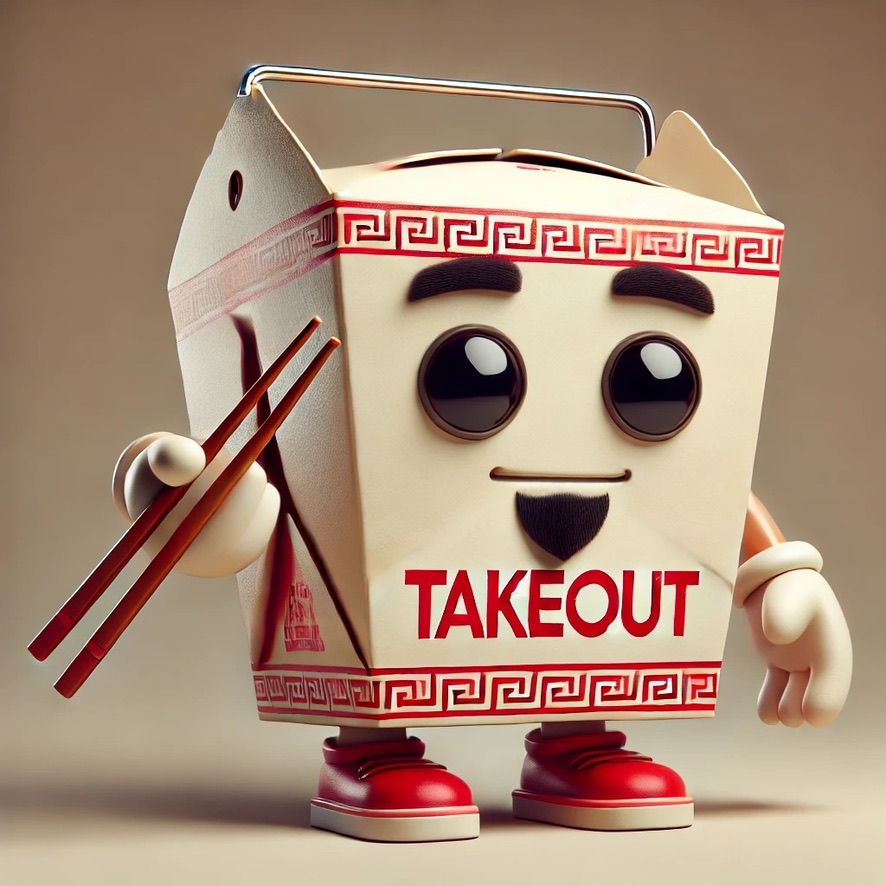
<p><img src="/assets/media/2024/08/DALL·E-2024-08-14-14.54.42-A-close-up-cinematic-shot-of-a-jellybean-character-inspired-by-the-image-provided-with-the-character-closely-examining-a-glass-jar-of-jellybeans-in-.webp" alt="" /></p>

<p><img src="/assets/media/2024/08/DALL·E-2024-08-14-17.03.22-A-friendly-gathering-of-four-mascots_-a-cute-toilet-character-with-big-eyes-and-a-smile-a-takeout-box-character-holding-chopsticks-and-smiling-a-rou.webp" alt="" /></p>]]></content><author><name>K</name></author><category term="AI" /><category term="Illustration" /><category term="2D" /><category term="AI" /><summary type="html"><![CDATA[]]></summary></entry><entry><title type="html"></title><link href="https://www.iksnae.com/2024/05/26/798/" rel="alternate" type="text/html" title="" /><published>2024-05-26T00:55:00+00:00</published><updated>2024-05-26T00:55:00+00:00</updated><id>https://www.iksnae.com/2024/05/26/798</id><content type="html" xml:base="https://www.iksnae.com/2024/05/26/798/"><![CDATA[<p><img src="/assets/media/2024/12/IMG_2164.jpg" alt="" /></p>

<p><img src="/assets/media/2024/12/IMG_2155.png" alt="" /></p>

<p><img src="/assets/media/2024/12/IMG_2171.png" alt="" /></p>

<p><img src="/assets/media/2024/12/IMG_2153.png" alt="" /></p>

<p><img src="/assets/media/2024/12/IMG_2151-2.png" alt="" /></p>]]></content><author><name>K</name></author><category term="Illustration" /><category term="2D" /><summary type="html"><![CDATA[]]></summary></entry><entry><title type="html"></title><link href="https://www.iksnae.com/2024/05/21/808/" rel="alternate" type="text/html" title="" /><published>2024-05-21T00:57:00+00:00</published><updated>2024-05-21T00:57:00+00:00</updated><id>https://www.iksnae.com/2024/05/21/808</id><content type="html" xml:base="https://www.iksnae.com/2024/05/21/808/"><![CDATA[<p><img src="/assets/media/2024/12/IMG_2139.png" alt="" /></p>

<p><img src="/assets/media/2024/12/IMG_2140.png" alt="" /></p>

<p><img src="/assets/media/2024/12/IMG_2141.png" alt="" /></p>

<p><img src="/assets/media/2024/12/IMG_2142.png" alt="" /></p>

<p><img src="/assets/media/2024/12/IMG_2143.png" alt="" /></p>]]></content><author><name>K</name></author><category term="Illustration" /><category term="2D" /><summary type="html"><![CDATA[]]></summary></entry><entry><title type="html">rollin up</title><link href="https://www.iksnae.com/2024/04/27/763/" rel="alternate" type="text/html" title="rollin up" /><published>2024-04-27T02:32:00+00:00</published><updated>2024-04-27T02:32:00+00:00</updated><id>https://www.iksnae.com/2024/04/27/763</id><content type="html" xml:base="https://www.iksnae.com/2024/04/27/763/"><![CDATA[<video controls="" src="/assets/media/2024/10/first-roll.mp4"></video>]]></content><author><name>K</name></author><category term="Animation" /><category term="Video" /><category term="photography" /><category term="time-lapse" /><summary type="html"><![CDATA[]]></summary></entry></feed>